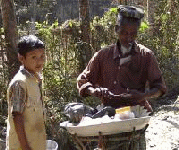
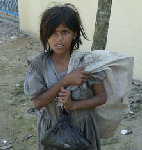
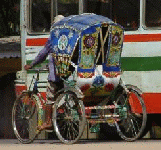
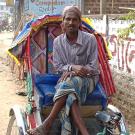
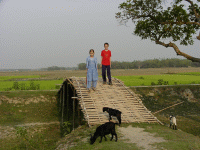
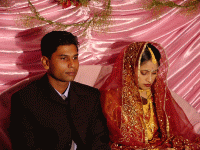
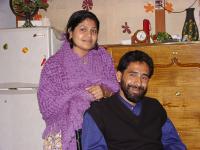
| These
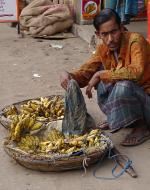
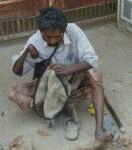
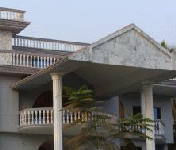
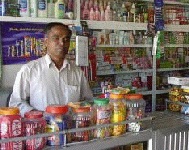
photographs were all taken between Jan 4th and March 22nd, 2002 in
Sylhet
Division in Bangladesh.
Bangladesh,
one
of the world's newest nations (established after a long struggle and a
very bloody war in 1971) is home to approximately 130,000,000 men,
women
and children.
Sylhet is one administrative division within Bangladesh, having only gained this privilege in the mid-1990s. A very large number of Bangladeshi migrants who move to the West have their roots in and maintain strong family ties with Sylhet. These people represent some of the more well-off in Bangladesh, able of course to migrate, and able also to re-invest in their communities. Much of the investment stays within the extended family, but more and more are starting businesses and bringing employment to impoverished areas. Sylhet, today, is one of the richest areas of Bangladesh. Besides its fertile land, Sylhet has two-thirds of the nation's natural gas reserves and it's only oil field. - it is also rich in limestone, peat, glass-sand and rock-gravel. Rice abounds as do tea plantations - the oldest tea plantation in Bangladesh is here. Cane furniture from Sylhet shows off the tremendous ability of these artistic people. This division is also the "spiritual capital" of Bangladesh. Islam came to the Bengal region 700 years ago through Shah Jalal - his shrine, and other implements associated with his life, are preserved in the town of Sylhet. Because of this it is one of the most visited areas of Bangladesh - thousands of Bengali Muslims visit the shrine each week. Sylhet is one of six divisions. It comprises approximately 8.5% of Bangladesh, and its people form about 6% of the population - but their influence far exceeds their representation. The Sylheti people are a strategic link to the welfare of a modern Bangladesh, be it economic, social or spiritual. |
Click pictures to see galleries.
By MBPDLPayday Loan Your comments would be greatly appreciated.
(Click post
box to send us an email)
 |